CTLZ.YOU
See your own architecture
You record yourself, alone.
I mirror your exact words back in a structure.
You see what you couldn't see.
I mirror your exact words back in a structure.
You see what you couldn't see.
Rotate to portrait
Everyone carries a structure. Not a personality type. Not a diagnosis. An actual architecture — built over decades, shaped by what happened to you, what you chose, what you avoided, what you repeat without knowing.
The problem is you can't see it from inside.
CTLZ maps your architecture across two axes. Time — your life organized in seven-year developmental cycles, each with its own task and character. Dimension — your experience organized across four quadrants: what you feel, what you do, what surrounds you, what connects you.
When your words land on both axes, you don't just hear your story. You see its shape. Patterns across decades. Beliefs you didn't know you carried. Columns full. Columns empty.
That's the architecture. It was always there. Now you can see it.
The process is built on 7 conditions. Each one is designed, not accidental.
Alone. You record yourself without anyone in the room. No interviewer. No camera. No one reacting to what you say. When someone is listening, you perform. Alone, that layer drops. Real stuff comes out when no one is watching.
No Interpretation. Your words come back exactly as you said them. No rephrasing. No "what I think you mean is..." The mirror doesn't translate. It reflects. You can't argue with your own words.
Structure. Guided questions take you where conversation can't. Not therapy questions. Not coaching prompts. Questions designed to surface what you carry — by time, by dimension, by nature.
Mirror. Your words become objects you can see from the outside. Organized into maps — by life phase, by quadrant, by what's positive, negative, neutral. Your exact language, placed into architecture.
Void. What you didn't say speaks louder than what you did. Empty columns. Missing quadrants. The silence in the map is the message. Nobody points it out. The architecture does.
Distance. Time between talking and seeing changes what you see. You record on Tuesday. You read the map on Friday. That gap isn't a delay — it's designed. The processing happens in between.
Layers. Session over session, the polished story cracks open. The first recording is the version you tell yourself. The third is closer to what's actually there.
In cooking, taste is what separates a recipe from a dish. Same ingredients — different hands, different result.
That's what taste means here.
CTLZ carries 30 years of experience reading people — patterns, contradictions, silences, the things people say without knowing they said them. That experience isn't a book or a course. It's embedded in the method itself: in the questions you're asked, in how your words are organized, in what the maps reveal and what they leave empty.
The AI doesn't decide anything. It processes — transcribes, organizes, structures. But the logic behind what matters, what to surface, how to read a map? That comes from human experience. Taught to the machine, piece by piece, over years.
This is how a personal craft becomes a scalable method without losing what makes it work. The technology carries the experience. The taste stays.
We're building a network of trained CTLZers — people who carry this same taste and can facilitate the process. It's early. We're honest about that. But the method is solid, tested, and it works because what's inside it is real.
Everything is changing. Not slowly, not eventually — now.
AI is reshaping industries, roles, identities. Professions that felt permanent are being rewritten. The ground under most careers is moving.
And in the middle of this, you're supposed to make decisions. About what to do next. About who you want to become. About what to keep and what to let go.
But how do you decide when you can't see clearly? When you're inside the storm, you don't see the storm — you just feel the wind.
CTLZ doesn't calm the storm. It shows you your own architecture — the structure underneath your choices, fears, patterns, and desires. When you see that, you stop reacting to change and start navigating it.
Five sessions. A few weeks. Your voice, your phone, your time.
You receive guided questions. You record yourself answering — alone, whenever you're ready. This first conversation maps who you are, where you are, and what surrounds you. Your words come back as your first Mirror Maps: an Anthroposophic Map (your life in seven-year cycles) and a Context Map (four dimensions of your current reality).
Now that context exists, we go deeper. What's actually going on? What needs to be solved? You record again. Your words become a Situation Map and an Ideas Map — what you see as the problem and what you think should change.
You read your own maps. Then you react. What surprised you? What did you already know but hadn't said out loud? Your feedback reshapes the maps into something sharper — an Adjusted Situation Map and a Collaborative Ideas Map.
You sit with it. No new questions — just absorption. Then you record your decisions and plans. What shifted? What will you actually do? This becomes your Change Map.
The final session. What's different now? You put it into action. A closing conversation — live or recorded — and your complete Mirror Book is delivered. Your architecture, on paper, yours to keep.
Throughout all of this, seven conditions hold the process together:
3–5 sessions over 4–8 weeks. The distance between sessions is designed — not filler. It's when the real processing happens.
Change is constant. It always was — but right now it's faster, deeper, and harder to read.
AI is rewriting industries. Roles are shifting. Some people have too many options and can't choose. Some have none and need to create them. Some are in the middle of a transition — new job, no job, a job that doesn't fit anymore. Some feel stuck even though nothing changed.
CTLZ doesn't require you to be in a specific place. It works wherever you are — as long as you're willing to talk honestly and sit with what comes back.
What it asks of you is simple: record yourself answering guided questions, alone. Then read your own words organized into maps. React. Adjust. Decide.
The process doesn't care about your title, your income, or how put-together your life looks from the outside. It cares about what you carry and what you're ready to see.
If you've ever said "I know what I need to do, I just can't see it clearly" — that's the feeling. But it's not the only one. Maybe you can't even name what's off. Maybe everything looks fine and something still doesn't fit. Maybe you're in crisis and need structure, not advice.
Wherever you are — CTLZ meets you there.
And if cost is the barrier — it shouldn't be. For every two people who pay for CTLZ, one person gets it free. Or at half price, for every one. The mirror doesn't know who paid.
From the people who did it. Their words, not mine.
"It's a self-diagnosis tool. It shines light on things that were in the shadow. Not therapy, not 'pillow talk.' Real-world practical application."
"I lost my innocence about myself. I saw the patterns I was repeating and couldn't unsee them."
"The market isn't my father. That sentence changed everything."
"What hit me was the empty columns. The things I couldn't name. That silence was louder than everything I said."
"My desire matters. I hadn't said that out loud in years. Seeing it on the map made it real."
"It's not therapy. It's not coaching. It's a mirror that organizes what you already know."
"I organized the desire. Built a plan with dates. Nobody told me what to do — I could see it."
"I built my own tool from it. Tested it. It worked. The map gave me confidence to trust what I already knew."
There's more to hear. Real audio from people who did the process. Longer stories. And a piece on what the maps reveal.
This isn't public — it's for people considering the process.
For as long as I can remember, people have sat across from me and talked. Not because I had answers — because something happened when they talked and I organized what I heard back to them.
I'd listen. I'd catch the thing they said between the lines. I'd put it in front of them and watch them go silent — the kind of silence that means something landed.
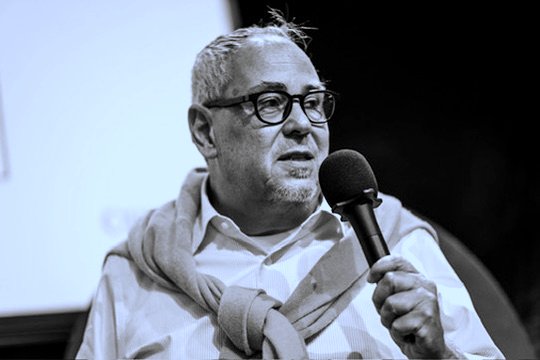
For 30 years I did this informally. In boardrooms, in late-night conversations, with founders, executives, friends, strangers. People would ask: "How do you do that?" I didn't have a good answer. It was intuition built on thousands of conversations.
Then people started saying something different: "You should turn this into a method." So I did.
I studied what I was actually doing. I found frameworks that matched — developmental cycles, multidimensional models of human experience. Not as theory, but as structure for what I'd been doing by feel. Then I brought in AI — not to replace the human part, but to carry it. I taught the system how I read people. How I spot patterns. What I listen for. What silence means.
CTLZ is that method. It's not a hobby and it's not an experiment. It's a professional process that has been tested with dozens of real people and it works. Every single one of them saw something they couldn't see before. Not because the technology is clever — because what's inside it is real.
I'm building a network of CTLZers — people trained to carry this same craft. We're early in that journey, and I'm honest about it. But the method is ready. The results are consistent. And the people who've been through it don't just recommend it — they volunteer to talk about it with anyone who's considering it.
One principle from the start: no one should be denied clarity because of money. For every two clients who pay, one person gets the process free. Same process, same method, same result.
That tells you more than anything I could write here.
— Bob
The best way to understand CTLZ is not this website. It's the people who did it.
We didn't ask them. They offered. The experience moved them enough to want to share it with anyone considering it.
They're not salespeople. They're not getting paid. They saw their own architecture and want to help you see yours.
Real audio from people who did the process. The click moment. What they saw. What changed.
Plus longer stories and a reflection on what the maps reveal.
This isn't public — it's for people genuinely considering the process.
Send a question. A CTLZee will respond within 48 hours.
15 minutes. No pitch. Just a real conversation. Ask them anything.
No funnel. No sequence. Just say what's on your mind.
The mirror doesn't change. You do.
You record yourself without anyone in the room. No interviewer. No camera watching. No one reacting to what you say.
This isn't a design choice — it's the foundation. When someone is listening, you perform. You edit. You manage their reaction while you talk. Alone, that layer drops. What comes out is rawer, less polished, and closer to what's actually there.
Every pilot confirmed it. The things people said alone — the pauses, the contradictions, the admissions — were different from what they'd say in conversation. Real stuff comes out when no one is watching.
Your words come back exactly as you said them. No rephrasing. No "what I think you mean is..." No framework imposed on top.
This is what separates CTLZ from therapy, coaching, and every other process that puts someone's interpretation between you and your own words. The mirror doesn't translate. It reflects.
When you see "I convince anyone except myself" on the map, those are your words. Not a therapist's summary. Not a coach's reframe. Yours. And you can't argue with them.
The recording sessions aren't freeform. You respond to guided questions designed to take you places conversation can't reach.
Structure does what openness can't — it creates edges. When you're asked about a specific septennium, a specific quadrant, a specific dimension of your life, you can't hide in generalities. The questions are the architecture. Your answers fill it.
Without structure, you tell your story. With structure, the story cracks open.
Your words become visual objects — placed in maps, organized by time and dimension, tagged by nature. You see them from the outside.
This is the shift. When something lives inside your head, it's a feeling. When it's on a map next to other things you said, it's a pattern. You see what repeats. You see what contradicts. You see what's next to what.
The mirror doesn't change what you said. It changes how you see it.
The mosnts with nothing in them. Silence where there should be words. Nobody points this out. The architecture does — by making absence visible.
One person had intentions in every column and zero actions. Another couldn't name a single positive episode in an entire 7-year period. What you didn't say speaks louder than what you did.
You don't see your maps the same day you record. Days pass. Sometimes a week. The distance is designed.
When you talk, you're inside the emotion. When you see the map days later, the emotion has cooled and the patterns are louder. You're reading yourself with fresh eyes — the way you'd read someone else's story.
Time between talking and seeing changes what you see.
CTLZ isn't one session. It's 3–5 sessions over weeks. Each one builds on the last. Each map adds a layer.
The first session, people tell their polished story. By the second, the polish cracks. By the third, they're looking at the Adjusted Map — seeing what changed since they first saw themselves. The layers don't add information. They strip away performance.
It builds until what's left is what's real.